This remarkable and disturbing simulation video, from Australia, shows what circumstances we may be facing when evacuating:
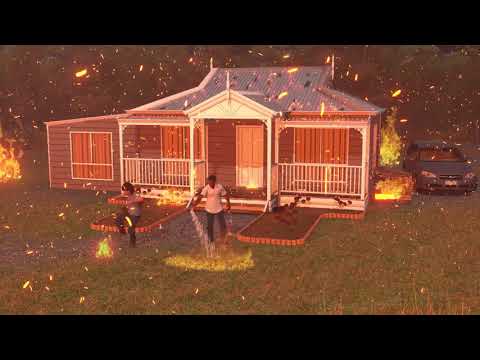
There is little doubt that we will be facing ember storms when evacuating. If a wildfire comes in fire season, it will likely be during strong N-E Diablo winds. A part of Tilden Park will be burning, and embers will come down in large quantities around our neighborhoods for many hours.
The clothing we wear during evacuation can significantly enhance—or worsen—our safety. Clothing recommendations in wildfire preparation sites are in general fairly brief, primarily mentioning the need to avoid synthetics (which can melt on your skin and cause significant burns), and recommending clothing made of thick layers of wool or tightly woven cotton.
- CalFire’s full recommendation for evacuation clothing: “Cover-up to protect against heat and flying embers. Wear long pants, long sleeve shirt, heavy shoes/boots, cap, dry bandanna for face cover, goggles or glasses. 100% cotton is preferable.”
- Northeast States Emergency Consortium: “Wear protective clothing – sturdy shoes, cotton or wool clothing, long pants, a long-sleeved shirt, gloves and a handkerchief to protect your face.”
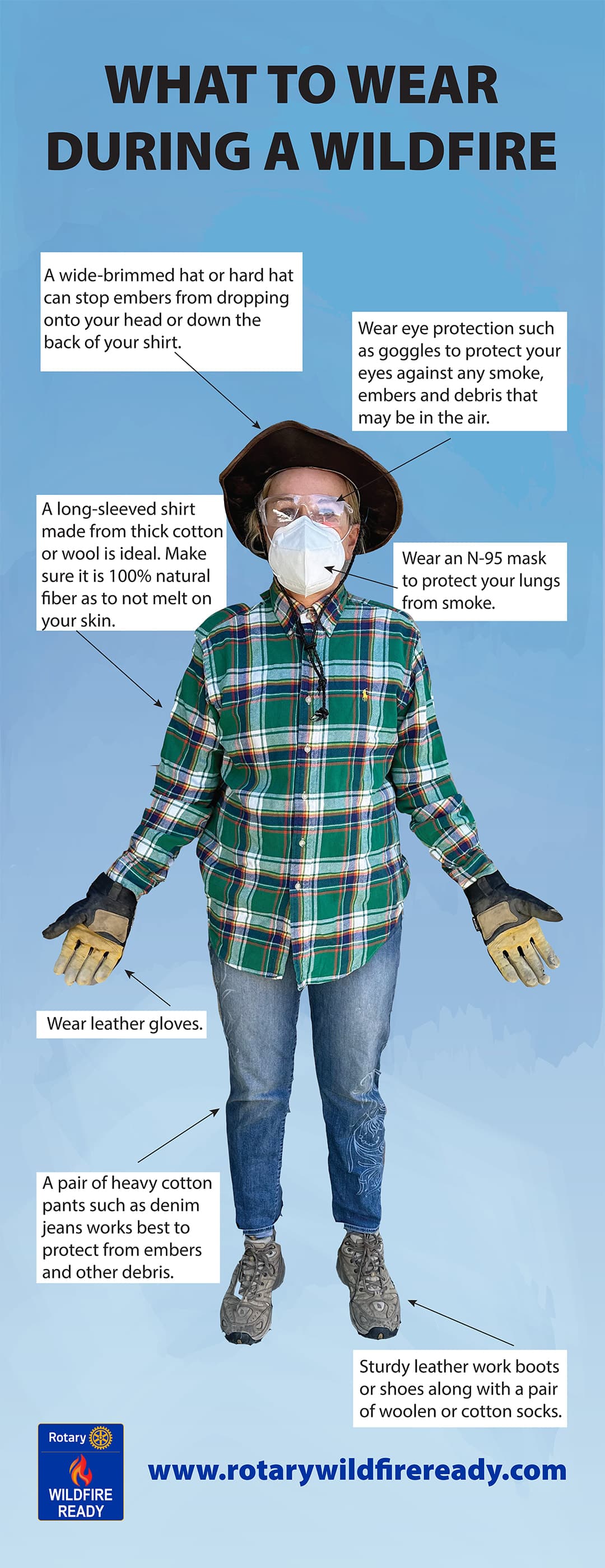
The Rotary Clubs of Evergreen, Conifer, Genesee and Bailey (Colorado), however, in their Rotary Wildfire Ready website, have actually assembled a detailed and well-written presentation of current recommendations for evacuation clothing. They called it Dress for Survival—because that is what it might mean.
source: RotaryWildfireReady.com
Note the wide-brimmed hat (please do not pick a hat made of synthetic materials unless you know it is fire-resistant), the goggles or glasses, hard-soled leather work boots (not simulated leather), wool or cotton socks, heavy denim 100% cotton jeans, heavy long-sleeve flannel shirt, leather gloves (not simulated leather), and face cover.
Please note, however, that CalFire, above, recommends a dry bandanna for a mask instead of an N95: there could be higher danger for a paper-made N95 to catch fire from embers. On the other hand, the USDA also recommends wearing an N95 during a wildfire in the Guide to staying safe during a wildfire [PDF].
More information on safer clothing
The City of Phoenix used to publish valuable facts about fabric and fire (they do not appear on their website any more). Here are some of them, courtesy of Govtech.com:
- "Wool is difficult to ignite and if ignited, usually has a low burning rate and may self-extinguish.
- Heavy, tight weave fabrics will burn more slowly than loose weave, light fabrics of the same material.
- Glass fibers and modacrylic are synthetic fibers designed and manufactured to possess flame-retardant properties.
- Most synthetic fabrics such as nylon, acrylic or polyester tend to be slow to ignite but once ignited, the fabrics melt. This hot, sticky, melted substance causes localized and extremely severe burns.
- When natural and synthetic fibers are blended, the hazard may increase because of one’s high rate of burning and the other melting.
- Avoid silk that has a high burning rate that may be increased by dyes and other additives to provide color.
- Cotton, linen, acetate and triacetate also have a high burning rate but this can be alleviated by the application of flame-retardant chemical additives.
- Applying a flame-retardant treatment after manufacturing is not recommended for clothing but can be used on curtains and other home textiles.
- Flame-retardant treated garments require special laundering to maintain effectiveness (read the clothing label).
- The surface texture of the fabric also affects flammability. Fabrics with long, loose, fluffy pile or ‘brushed’ nap will ignite more readily than fabrics with a hard, tight surface, and in some cases will result in flames flashing across the fabric surface."