Firescaping is a new landscaping technique that use defensive spaces, noncombustible materials, fire-resistant plants and other techniques to create fire-resistant or fire-resilient landscapes and help protect the structures within from igniting.
- FireSafeMarin’s definition and description
- Firescaping according to the UC Master Gardeners of San Mateo and San Francisco Counties
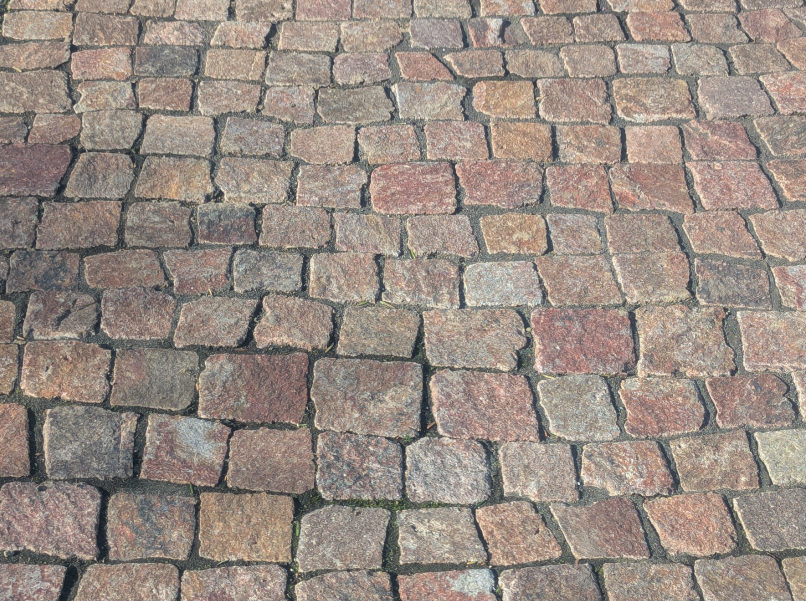
Noncombustible hardscapes
The use of noncombustible materials such as rock, gravel, boulders, brick or concrete as the primary frame of your landscape can create beauty while inhibiting the advance of fire.
Active maintenance
Living vegetation produces combustible debris. Dead or dry vegetation, leaves or needles, anything in your yard or gutters, or on your decks, roofs or terraces that you could use to start a campfire is an opportunity for wildfire to propagate closer to your home. Ongoing, regular maintenance is a requirement to keep a fire-resistant environment around your home.
Defensive space
Modern fire science has identified critical needs for defensive space around your home to prevent it from igniting. Zone 0, 0-5ft from your home, should be ember-resistant and kept pristine of combustible materials of any kind. Zone 1, at a 5-30 ft distance, lean, clean and green, should provide sparse fuel to fire, spaced in a manner where fire cannot easily propagate from one plant to the next, horizontally or vertically. Zone 2, 30-100 ft, if it exists in your yard, should provide a reduced fuel load to a potential wildfire, by having vegetation thinned, and trees and shrubs limbed and spaced.
- [what BFD says about defensive space](Defensible Space — Fire Safe Berkeley)
- FireSafeMarin’s description of defensive space
No wood mulch
Wood mulch, essentially wood debris on the ground, provides a direct path for wildfire to your home. Rock or gravel mulch is the preferred choice for mulch in Zones 0-2, and the only one to use in Zone 0. Whole composted mulch was shown to be, in the single study available, less combustible than other mulch, it still allowed fire to progress at 0.3 ft/mn: it is hard to see which circumstances would allow for the use of ANY organic mulch, even in zones 1 or 2 (this is one area where we disagree 100% with FireSafe Marin).
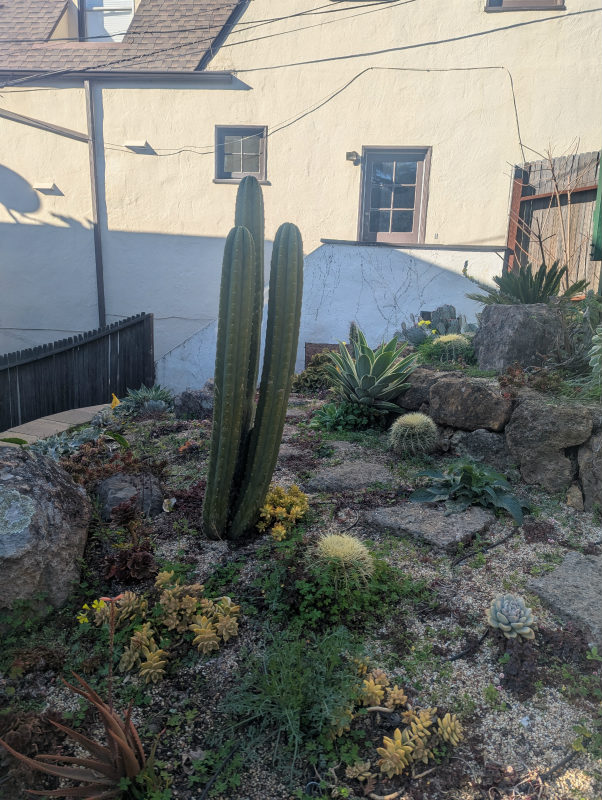
Plant placement
Plants, shrubs and trees must be placed to create defensive space, spaced to avoid horizontal wildfire spread, and limbed to avoid vertical wildfire spread.
Appropriate plant choices
Firescaping prioritizes plants with high moisture content that are hard to ignite, often native to our environment. That said, in many ways plant selection is the least part of the process: “fire-resistant” plants are a misnomer, only resistant to a minor degree. In the end, there is no such thing as a plant that does not burn.
Firewise
In Berkeley, where parcels are small and houses are densely built, your home cannot saved without collaboration from all your neighbors: there is research evidence that structures build within 60 feet of each other will negatively impact each other’s survival. Work with your neighbors to create the proper zones around structure, whomever the space belongs to. Work with your neighbors to learn together about fire safety, defensive spaces, and firescaping. Consider starting a Firewise neighborhood with your neighbors!