There is a lot of confusion about the legal status of EMBER: leading with the law can provide clarity.
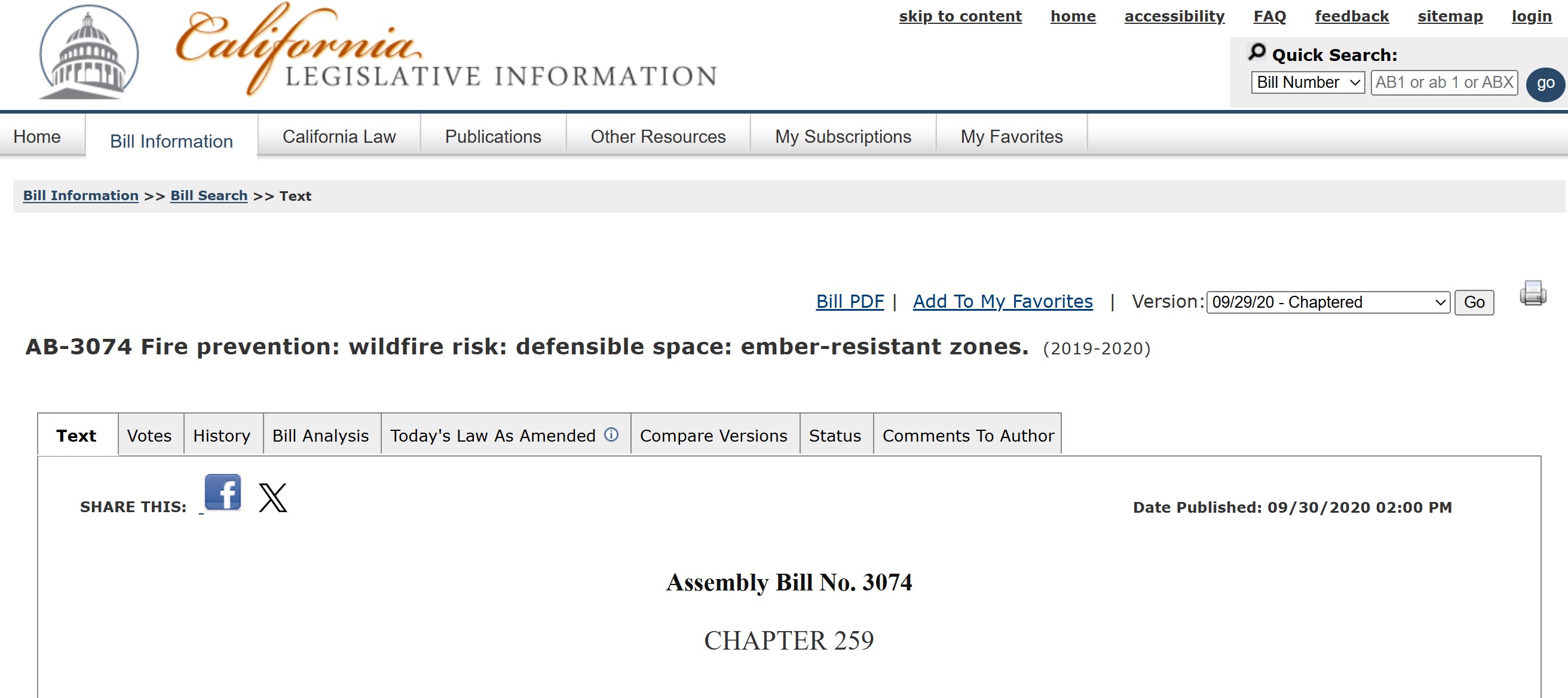
The requirement of Zone 0 in the Wildland Urban Interface (WUI) is a CA state law, AB 3074, passed in early 2021. It did not have an enforcement mechanism. Now the Governor has issued an executive order, N-18-25, expediting implementation.
This means that cities have to come up with plans for compliance and enforcement and EMBER is ours. Some people seem to think it is Berkeley making random demands rather than that Berkeley is complying with state law. The State Fire Marshal is going to finalize directions but it is clear that we need to prepare for the inevitable, which is what Berkeley is doing. So we cannot threaten council people with recall or change the law. It is not something the city can significantly change. Knowing this, property owners can start now (according to Google):
- Review your landscape: Identify and remove combustible materials within the five-foot zone.
- Use hardscape: Replace mulch with gravel, pavers, or concrete.
- Clear debris: Remove dead and dying plants, weeds, and debris from your roof, gutters, decks, and other areas.
- Prepare for enforcement: Local jurisdictions will be responsible for administering and enforcing AB 3074 regulations.
- Consult with local fire authorities: Get advice on specific requirements and how to prepare for enforcement.
So even if we are not sure which plants to remove, we can project forward and begin. I think that message is important.
FYI, insurance companies have their own requirements and vegetation management is very important for insurability, although a lot of this needs to happen at a neighborhood level. (It will be interesting to see if the area around Campus and Del Mar is more insurable with the large removal of eucalyptus that occurred last year: it has been a very difficult area to insure for at least a decade).
Insurance companies have proprietary modeling programs so we should probably lean towards the strictest interpretations: Cotality
The whole of our vegetation management directives are to try to help California remain insurable. Without insurance, the value of real estate would be negligible. This is an extremely serious problem not just for the California economy but for the worldwide economy. So programs like EMBER can be urgently important for maintaining Berkeley property values through insurability.
I served on the League of Women Voters statewide Wildfire Team from 2019. During Covid, our local League worked with UCB to get a program, using GIS modeling, going for vegetation management in the hills. From this unsuccessful attempt, my thought is to try to organize people’s thinking appropriately because how they frame the problem is the problem. This is my organizational thought. I would be very interested to hear yours:
- Climate change is causing more extreme fires.
- Extreme wildfires are undermining insurability. This is driving state law (without insurance, property values become negligible and people cannot recover).
- EMBER is a response to the requirements of state law.
On a more positive note, if I remember, Alameda county has a national FEMA risk score of almost 100% (and 95% for California), but a Community Resilience that is VERY HIGH. That means, I believe, that we have an excellent chance of working together to respond to the climate crisis.
Reference
- Bill Text - AB-3074 Fire prevention: wildfire risk: defensible space: ember-resistant zones.
- https://hazards.fema.gov/nri/map
Author: Candace Hyde-Wang