Councilmember Brent Blackaby's progress towards Zone 0 compliance

We asked Brent Blackaby, Councilmember for District 6, to share with us his progress towards Zone 0 compliance. He generously agreed to share his thoughts along with a few pictures every few weeks. His posts will be published below. Check here often!

You can find Brent’s posts on Substack here.

An Introduction to my progress towards Zone Zero Compliance
by Brent Blackaby

Last June, the Berkeley City Council unanimously passed our EMBER ordinance, a fact-based proposal from the Fire Department that asks ~900 households located in the highest wildfire danger zone along the Wildland Urban Interface (WUI) in the Berkeley Hills to clear all combustible material within 5 feet of their homes, including shrubs and plants, patio furniture, and wooden gates and fences that intersect structures.

This “Zone Zero” proposal is based on the best available wildfire science and after-action studies in the wake of catastrophic fires that have struck California, including most recently in Altadena and Pacific Palisades.

Why Zone Zero here in Berkeley? Because the most likely wildfire to threaten our community will come out of Tilden Park on a dry, hot, windy day — not as a wall of flames, but as millions of small wind-blown embers that rain down on rooftops, blow under eaves and against windows & doors, and pile up around the bases of homes.

If we harden our homes so embers can’t penetrate into vents, under garage doors, or ignite siding… and if we ensure that embers collecting on the ground within 5 feet don’t ignite dry material right next to our homes… then we can prevent an ember storm from metastasizing into an urban conflagration where our densely packed homes become the fuel and whole neighborhoods are consumed. And we will buy valuable minutes and hours that will enable the Fire Department and all our nearby mutual aid resources to swing into action to extinguish other spot fires that may pop up.

As a councilmember, protecting the safety of our families and our neighborhoods is my absolute top priority. Given the wildfire threat that we face, as the effects of climate change accelerate, I believe that Zone Zero and home hardening are critically important.

But don’t just take my word for it. The latest study from UC Berkeley Professor Michael Gollner shows that home hardening and creating Zone Zero defensible space around structures can double the number of homes that survive an urban conflagration like what we saw in Altadena and Pacific Palisades, halving the amount of damage done in a devastating wildfire.

To be sure, these are not the only actions we must take to make our community more wildfire resilient: Vegetation management in Tilden Park, removal of hazardous fuels including eucalyptus, ensuring safety of power lines and auto-shutoff by PG&E on fire weather days, ensuring EBMUD can deliver adequate water supply to fight fires, pre-evacuation of residents on extreme weather days — all of these things will have an impact too.

But there’s no question that what we do to prepare our homes and our yards for the wildfire threat — especially at scale, across all 900 homes in the WUI adjacent to Tilden Park — will play a vital role in our community’s wildfire resiliency.

It’s not going to be easy. But if we each do our part individually, then collectively I’m confident we will meet the moment.

It starts with each of us. I’m a city councilmember that passed the ordinance. But I’m also a homeowner that’s being asked to do this important work at my own home here in the Grizzly Peak Mitigation Area.

So I will document and share my family’s own experience, in real-time, as we walk step-by-step down the path to EMBER compliance.

I hope you’ll follow our journey, and share any tips you have along the way. If we can make this a little easier or answer questions that you or some of our neighbors have, then it will be well worth it.

Let’s get going! The sooner we start, the sooner we’ll reach the goal of creating a non-combustible Zone Zero around our homes.

In my next post, I’ll share more details about the first phase of work we did last fall, and then turn our attention to the work we’re doing next in the weeks ahead.

1 Like

# Getting started with Zone Zero: Take inventory, then take a first step!
by Brent Blackaby

Last summer, after the Berkeley City Council unanimously approved the Fire Department’s EMBER proposal — along with amendments and modifications I introduced to improve implementation based on community feedback — it was time for our us to get started on Zone Zero right here at our own home.

Fortunately, in previous years, our family had already done vegetation management work in our front yard to meet Zone 1 standards for creating a a “lean, clean, and green” 30-foot defensible space around our home. That’s a good place to build from. But Zone Zero requires more effort and care in the first 5 feet around the perimeter of our home, both in the front yard and back.

So first, we took a quick inventory. Where would we really need to focus our attention? And ultimately, where should we start first, to get the ball rolling?

The good news is, we already have some natural Zone Zero advantages around parts of our home:

  • Directly out front, we have a driveway leading into our garage — offering at least 20 feet of noncombustible space extending all the way out to the street. Great!
  • Along one side of our home, we have a cement sidewalk separating our home from our neighbor’s that heads down to the backyard, with a small gravel bed for drainage in between the sidewalk and the house itself. All told, that offers 5-6 feet of clearance between our home and the property line. With the exception of a few combustible odds and ends I’ve stored in that area, like a ladder and lawnmower that I can easily move to a different location, this side is in good shape too.
  • In the back yard, we have an 18-foot patio composed of paver stones that extends from the entire west-facing side of the house. There is an elevated deck that covers part of the patio, accessible from the home’s upper story, that I will need to ask the Fire Department about, as well as some big bushes that touch that deck. But the ground level patio itself provides a great existing noncombustible buffer.

That’s the good news. But in taking inventory, we also identified areas we’d need to work on:

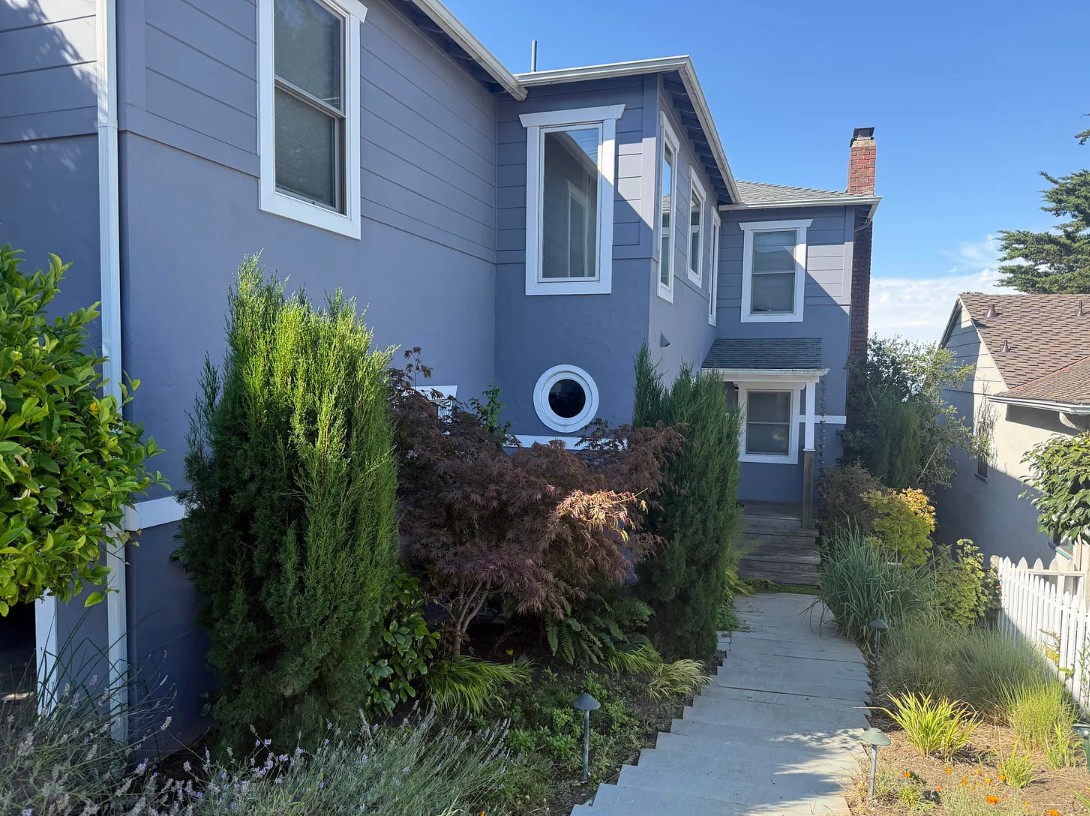
  • In the front yard, we have some camelias, ferns, other smaller bushes, and ground cover — as well as mulch — in much of our Zone Zero. We’ll need to address those.
  • We have three Italian cypress trees posted in different locations 4-6 feet away from our home. While they look nice, they’re extremely flammable. We’ll need to remove them.
  • We also have a nice Japanese maple in our front yard, only about 4 feet from our house, that’s still young and needs to mature. Should we move it? Can we extend our Zone Zero around it? We’ll need more guidance from the Fire Department to figure out how to proceed.
  • We have a lovely lemon tree located 5-6 feet from the house that needs to be carefully pruned. Ultimately we will want to encourage branches to grow out toward the street rather than into the house.
  • There’s a large, tall, full tree next to the driveway with branches that extend over the roof and into the side of our home. We need to create more horizontal clearance, but it’s tall and we can’t do it on our own. We’ll need an arborist to help us.
  • One one side of our house, we have a small wooden gate at the bottom of the sidewalk leading to our backyard, and on the other side of the house we also have a small wooden fence segment touching our house. We’ll need to replace those with noncombustible materials.
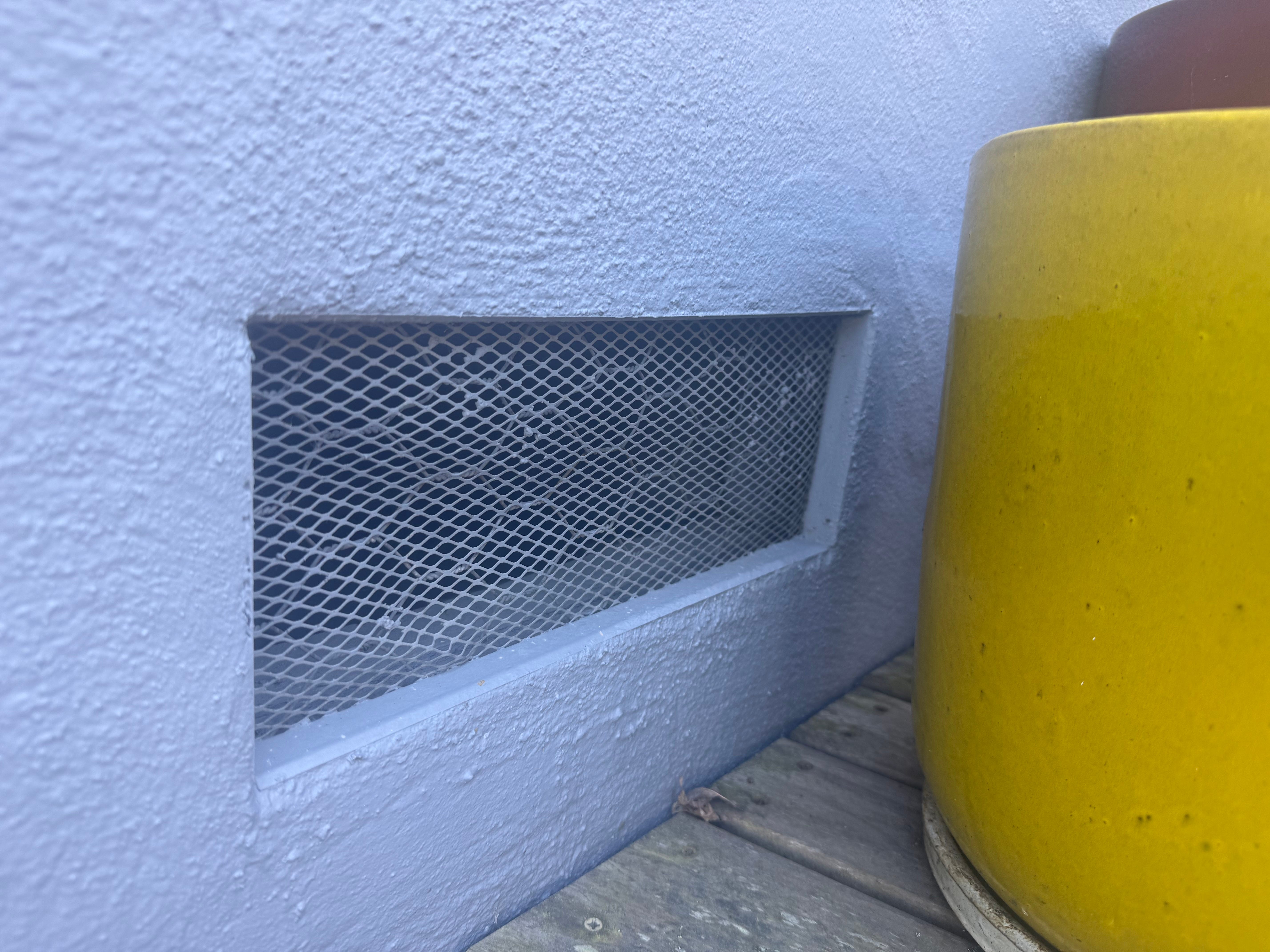
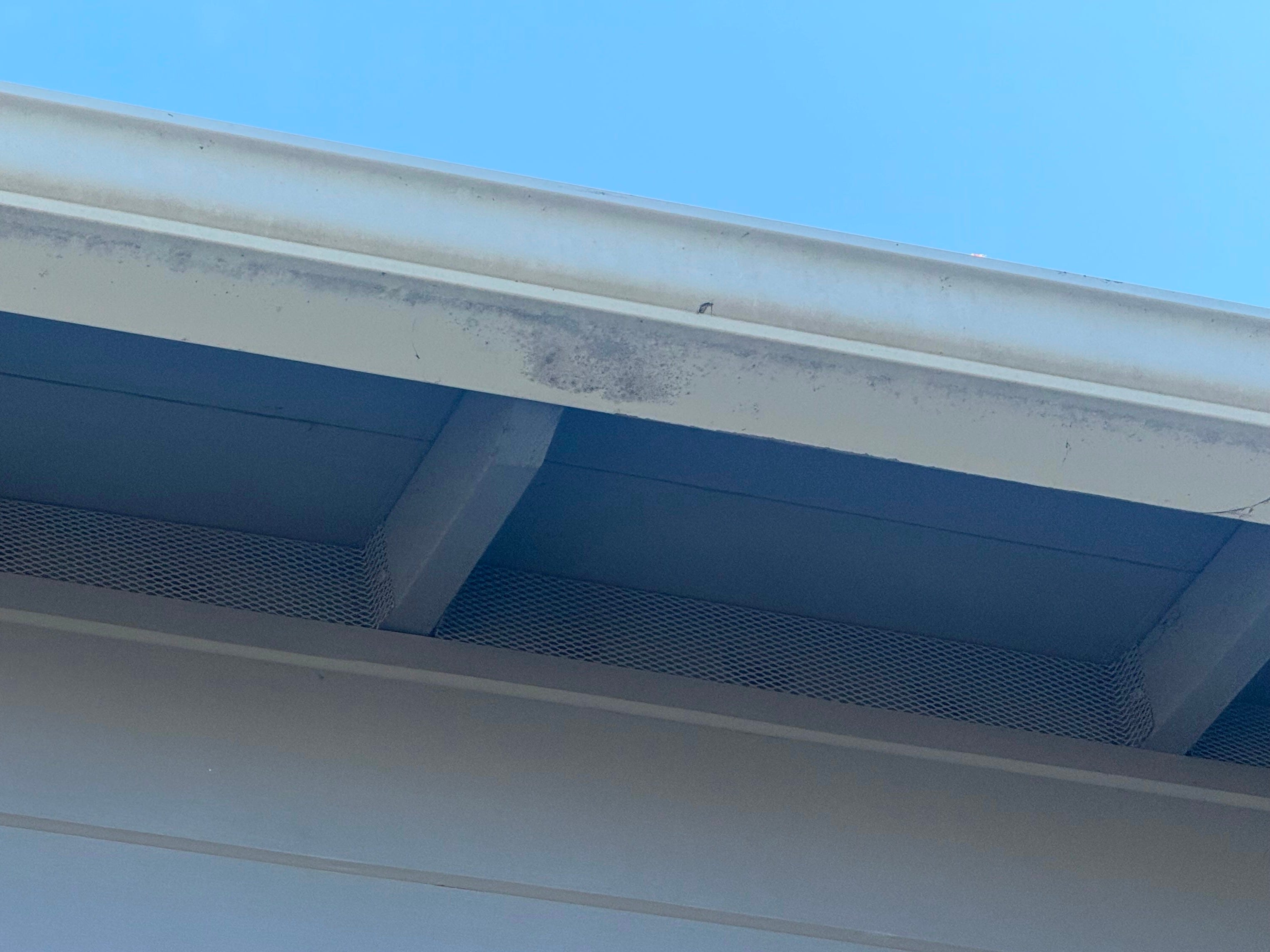
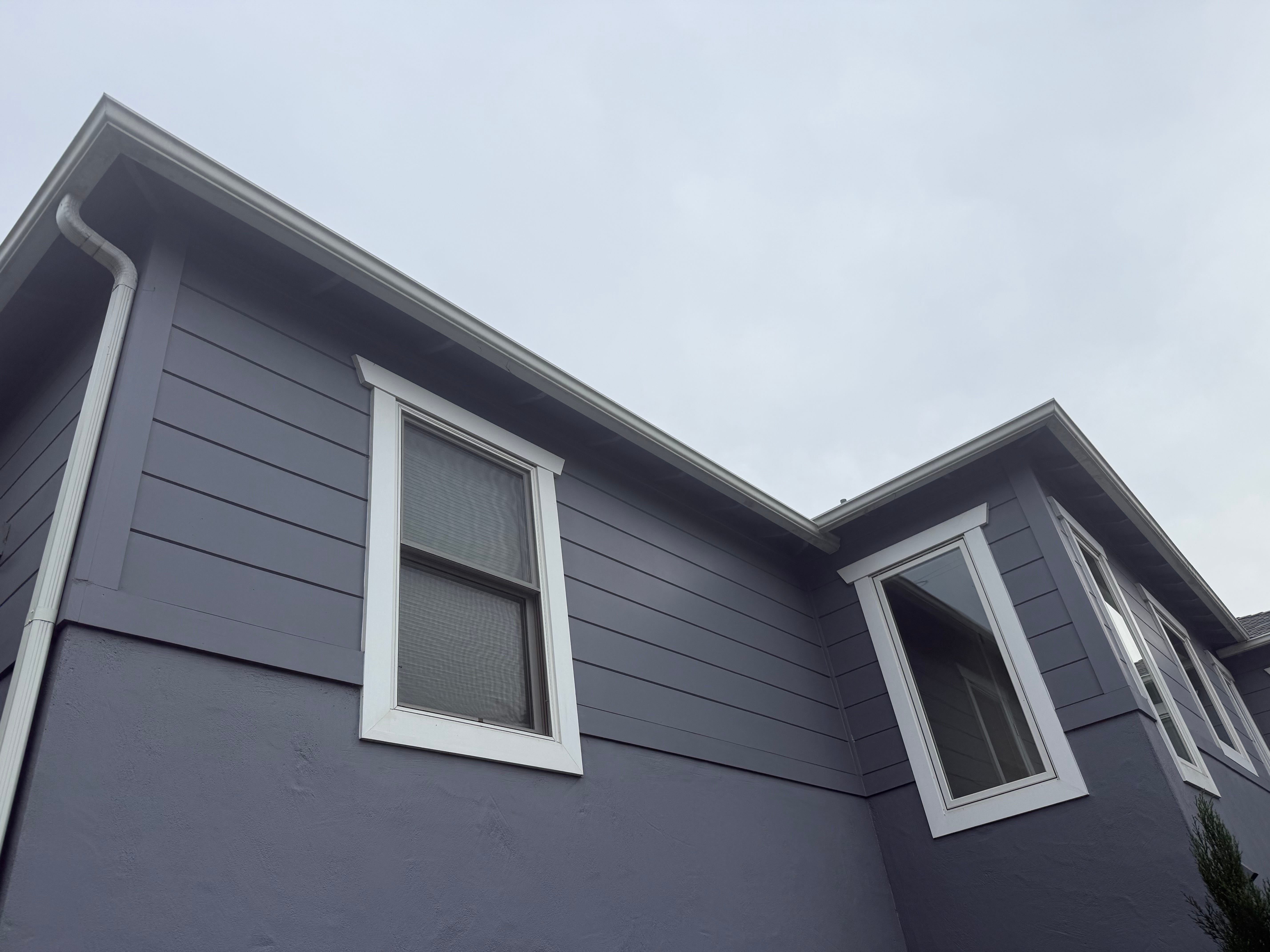
  • We also want to screen with wire mesh the vents under the eaves all around our home, as well as cover our gutters with mesh to prevent leaves from collecting and becoming a fire hazard. While not explicitly required by EMBER, I’ve learned that these are very cost effective home hardening tasks that are relatively inexpensive (BFD will provide the materials for free!) and hugely important for preventing ember ignition.

That’s not a short list! We certainly couldn’t tackle it all at once. But where should we start?

For me personally, the most difficult step to take is usually the first one. Inertia is a powerful force. So just changing from “no motion” to “motion” is often the biggest hurdle. I wanted to make that shift as simple as possible by tackling a first project that I could easily accomplish in a weekend.

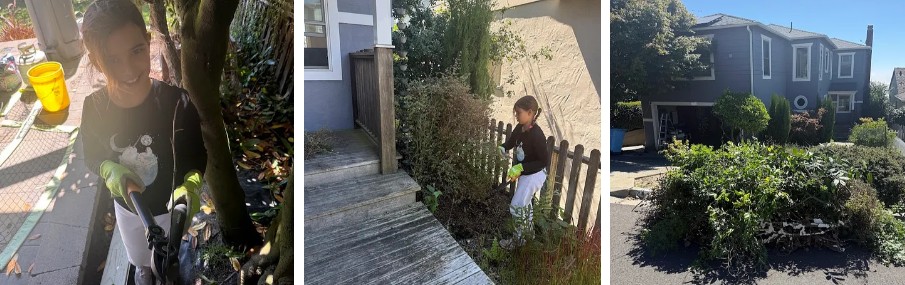
So last August, we decided to start somewhere easy, to get the ball rolling. We decided to trim some of the branches out of our big driveway tree and our small lemon tree — and to also pull up some of the weeds and bushy overgrowth in the front yard next to our house and our front porch.

Fortunately, some Firewise Communities in our area were organizing a “Prepare for Fire Season” weekend event in August, encouraging neighbors all along the Grizzly Peak Ridge to take an hour or two to remove vegetation from their yards — even scheduling a bunch of appointments with BFD’s chipper program to make it easy to haul off all the debris. (Side note: I highly recommend taking advantage of the chipper program — for your own home, or for your neighborhood!) A weekend event like this really helps people feel like we’re all in this together.

That was just the catalyst we needed. My trusty sidekick and I spent a few hours on a Saturday afternoon weeding, trimming, pruning, and clearing. And we stacked up a big pile of branches, leaves, and weeds for the chipper to haul off the following Monday.

That Sunday afternoon, we celebrated a weekend of productive work with friends and neighbors at a picnic at Crescent Park in Park Hills — all told, amassing 55 cubic yards of debris across 46 different chipper pickup piles over an August weekend. It was fun to see everyone and feel good about the work we had each done to make our homes and our neighborhood safer.

And it was a great way for our family to take a relatively easy first step as we embark on our journey to full Zone Zero compliance.

Now our inertia has shifted toward motion — and we have more steps to take. Stay tuned.

1 Like

What We Learned from our BFD 1:1 Home Consultation
By Brent Blackaby

Last fall, we hired an arborist to trim some bigger trees in the back yard and next to the driveway, carefully prune some branches on our front yard lemon tree, and remove an Italian cypress tree and some bushes in Zone Zero in the front yard.

After we had taken more of those preliminary steps to remove vegetation and begin clearing 5 feet of non-combustible space surrounding our home, we wanted to turn to the experts to get additional guidance and support for the steps we need to take next.

So in November I scheduled a 1-hour inspection with staff from the Berkeley Fire Department Wildland Urban Interface (WUI) team.

This 1:1 consultation was extremely helpful! We walked the full 360 degree perimeter of our home with 2 knowledgeable inspectors, asked lots of questions, got their feedback, and were able to identify the key areas we really needed to focus on.

In short, here were our key takeaways from our inspection:

(1) We’ve made good progress on part of the landscaping in front of our home. Here are before and after photos:

Much of the vegetation in Zone Zero has been removed, but we still have mulch to rake up.

As you can probably see, we also have a Japanese maple that’s only 3-4 feet away from the home that we’ll likely need to either move or seek a WAMMR for. (A WAMMR is a request to BFD, which they must review and approve, to extend out additional defensible space around the tree and further harden our home behind the tree, to meet the same level of wildfire resiliency as if we had otherwise moved the tree.) I’m going to leave that for now, but we need to come back to it in the next few months and make some decisions.

(2) We still have some flower beds near the front steps where we need to remove ferns, bushes, and ground cover — and the mulch underneath those plants:

There’s also a small section of wood fence that touches the house at the very top of the first photo, which we’ll need to replace with non-combustible material.

We’ll also need to be ready to move that storage box of wound-up hose in photos 2 & 3 on extreme fire weather days.

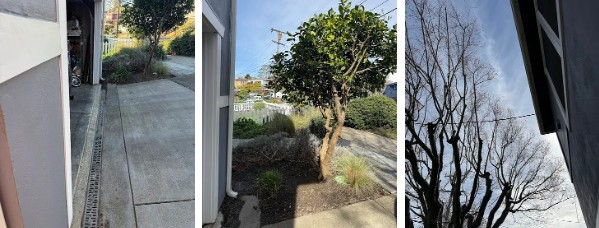
(3) The area around our front driveway is in pretty good shape:

You can see that the lemon tree has pretty well been trimmed to create 5-feet of defensible space between it and the house. But we’ll need to keep monitoring that, pruning it and maintaining it to encourage growth outward rather than toward the house.

The driveway itself provides plenty of defensible space.

And then the other big tree that extends above the roofline has been trimmed back to create space away from the roof. But we’ll also need to keep that well maintained each year.

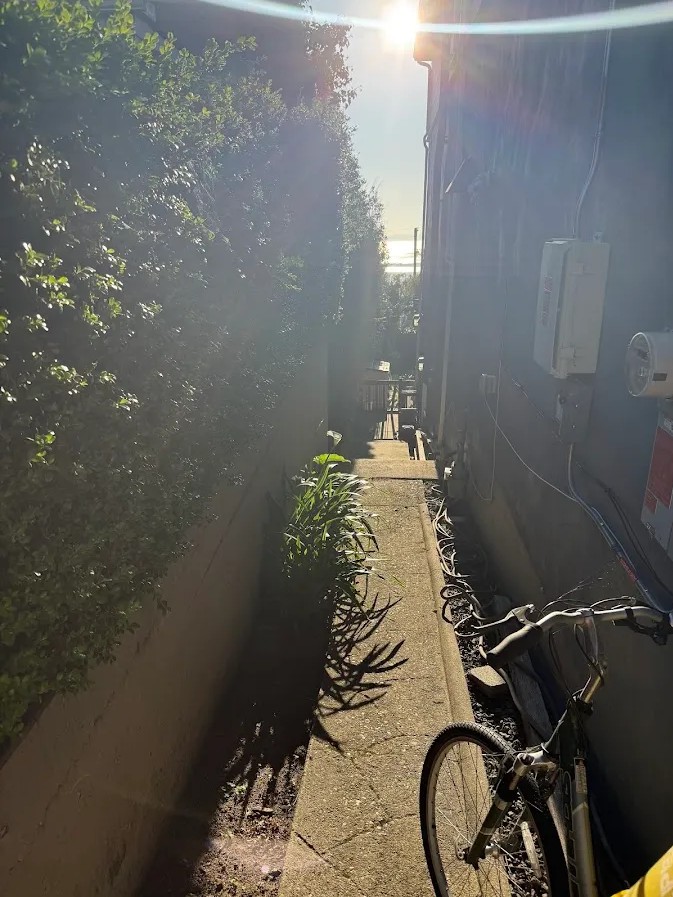
(4) The sidewalk from front to back creates its own 5-foot noncombustible zone:

That said, we’ll need to move some of the hoses, the lawnmower, and a few of the plants immediately adjacent to the path. But this whole southern side of the house will be pretty easy to maintain.

There’s a small gate at the bottom of the walkway that we’ll need to replace with noncombustible material.

We’re a little concerned about the parallel privacy hedge that separates our home from our neighbor’s, as it’s big and bushy, but it’s more than 5 feet from our house and for now is in decent shape.

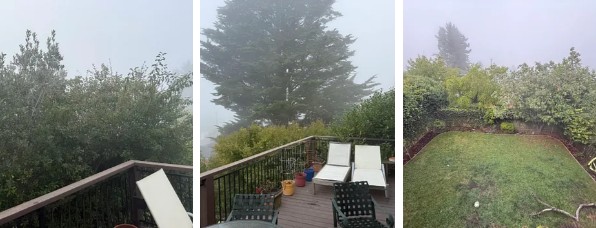
(5) Our back yard Zone Zero consists mainly of a brick patio at ground level, running all the way along the western side of the house, and a wood deck that extends one level above it.

There are some bushes that extend up and come in contact with the wood deck, which you can see in photos 1 & 2. We need to trim those way back.

But the patio itself provides a nice buffer between the bulk of the back yard and our home itself.

(6) We still need to screen our vents with wire mesh (so embers can’t penetrate and ignite the home from the inside) and cover our gutters (so leaf material can’t collect and catch fire).

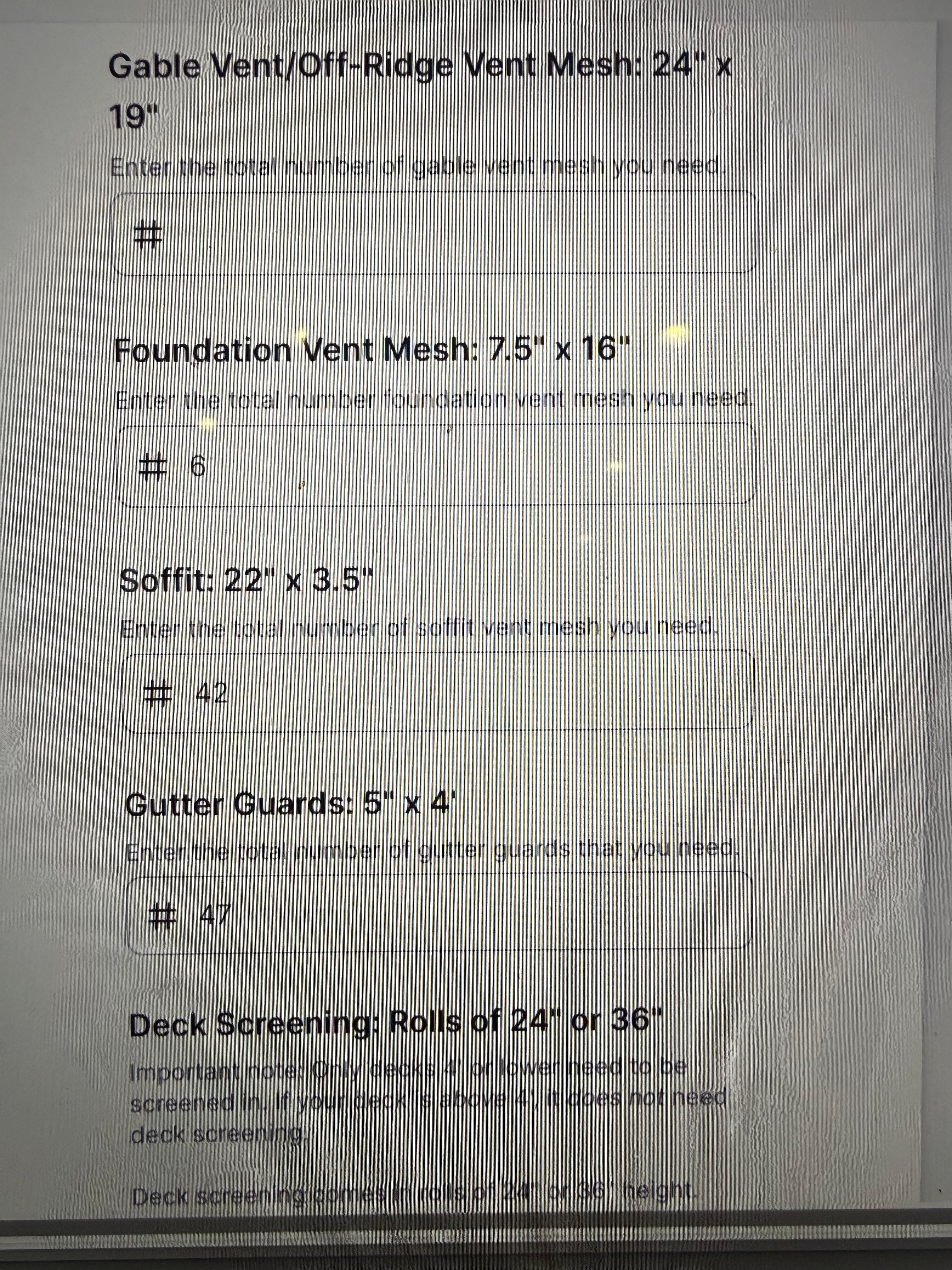
We know we’re going to need to take some measurements about the amount of material we’ll need, and line up a vendor to help us install it (our eaves are really high, so don’t want to do that on my own). The good news is that, because we live in the Grizzly Peak Mitigation Area and have now had a recent inspection, we’ll be able to order that material for free from BFD. (More on that in a future post!)


All told, the BFD inspection process was extremely easy and valuable. We’ve now got an even clearer picture of the key steps we need to take to complete our Zone Zero and harden our home by screening vents and covering gutters.

If you haven’t already, and you live in the Very High Fire Hazard Severity Zone, I highly encourage you to schedule your 1:1 consultation with BFD. Not only will they help you formulate a 3-year plan to meet EMBER’s requirements, but the inspection also serves as a necessary first step for you to subsequently apply for the Resident Assistance Program (for financial support), order your wire mesh, or request a WAMMR.
1 Like